
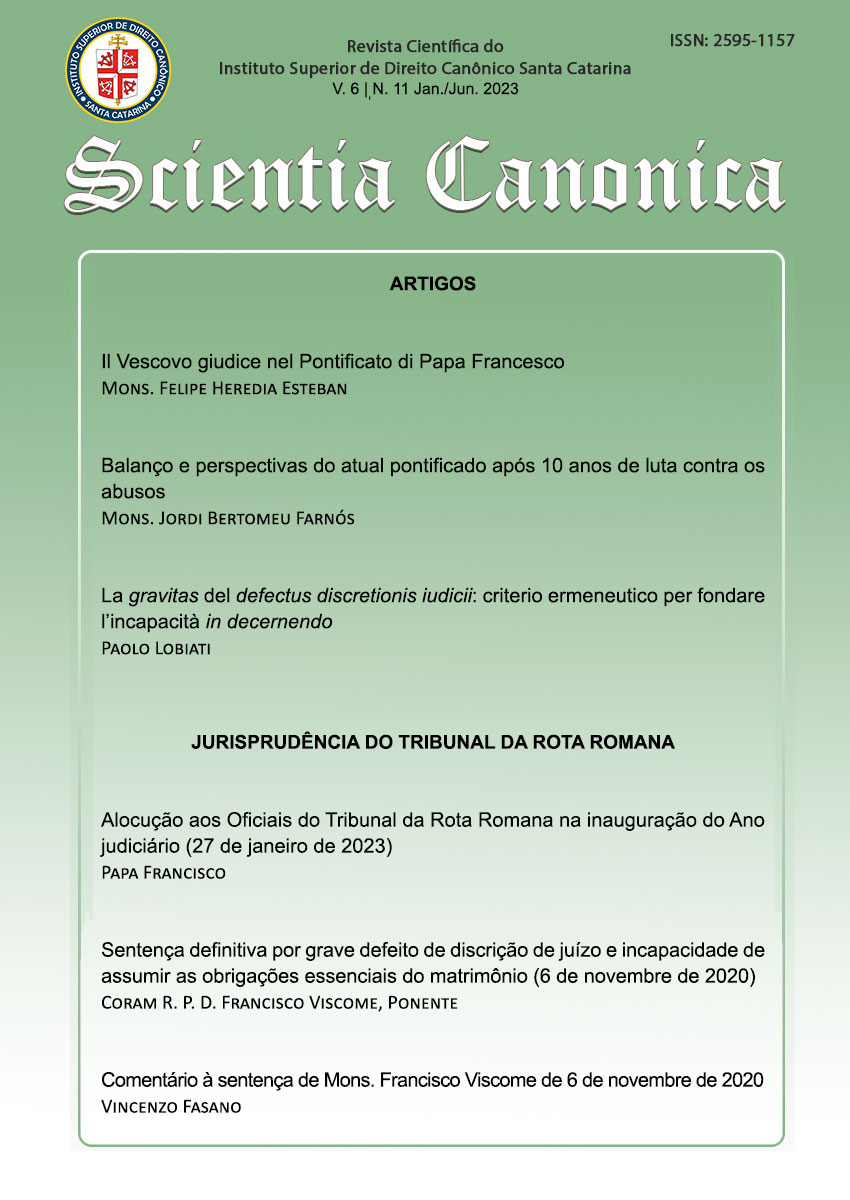
The Bishop as Judge in the Pontificate of Pope Francis
DOI:
https://doi.org/10.31240/2595-1165.vol6n11a2023pp21-40Keywords:
Bishop as judge, Pontificate of Pope Francis, Canonical reform, Declaration of nullity, Processus breviorAbstract
The reform initiated by Pope Francis aims to make the processes for a declaration of nullity more accessible and efficient. Through the documents "Mitis Iudex Dominus Iesus" and "Mitis et misericors Iesus," the Pope emphasizes the pivotal role of diocesan bishops in administering ecclesiastical justice, promoting episcopal collegiality, and fostering a synodal Church. This reform highlights the responsibilities of bishops by comparing the Codes of Canon Law from 1917 and 1983, underscoring the continuity and evolution of these roles. The introduction of the "Processus brevior" allows for quicker and simpler procedures for declarations of nullity, reflecting the Pope's commitment to decentralizing justice and ensuring pastoral proximity, thereby providing more effective and compassionate care to the faithful.
 INSTITUTO SUPERIOR DE DIREITO CANÔNICO SANTA CATARINA
